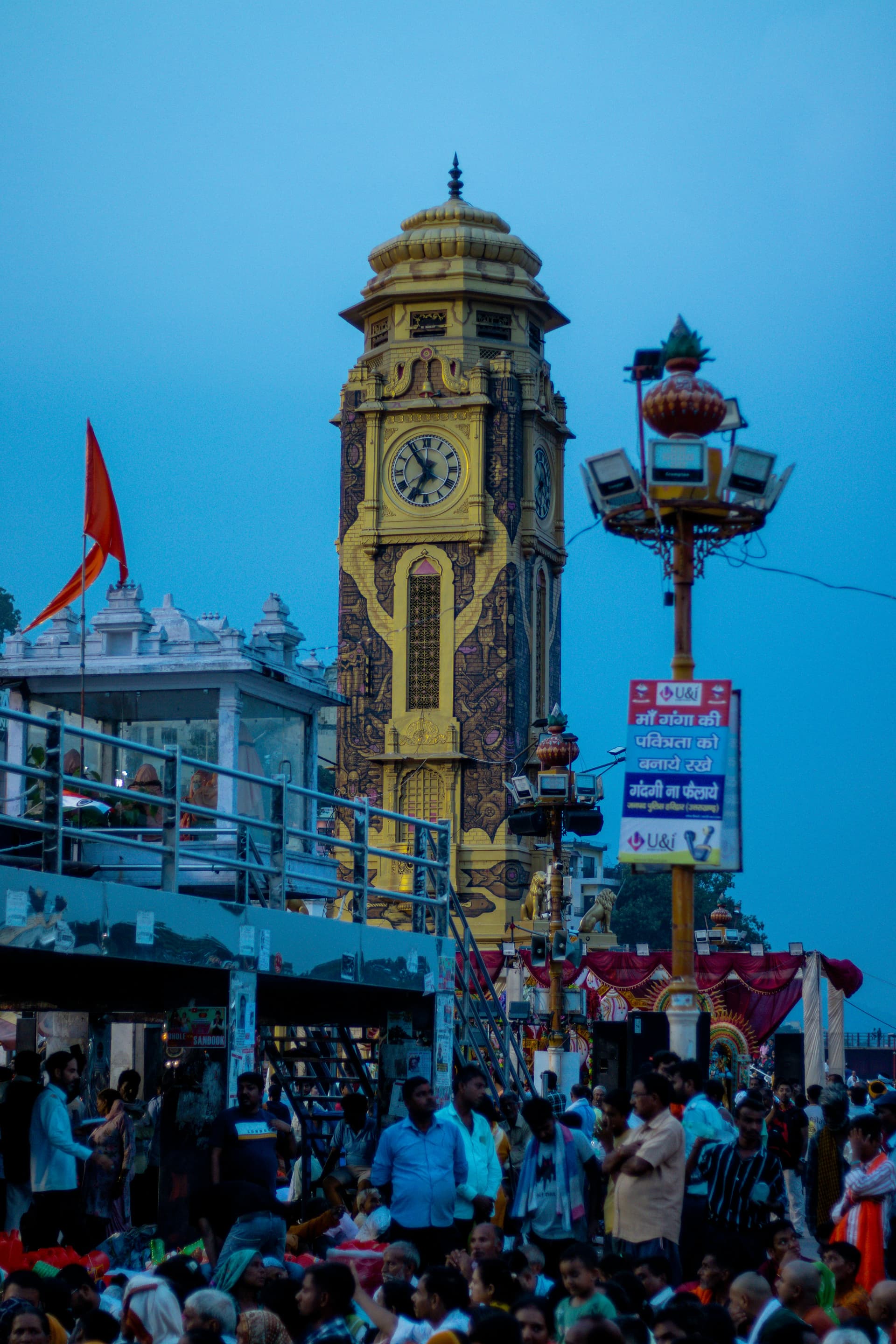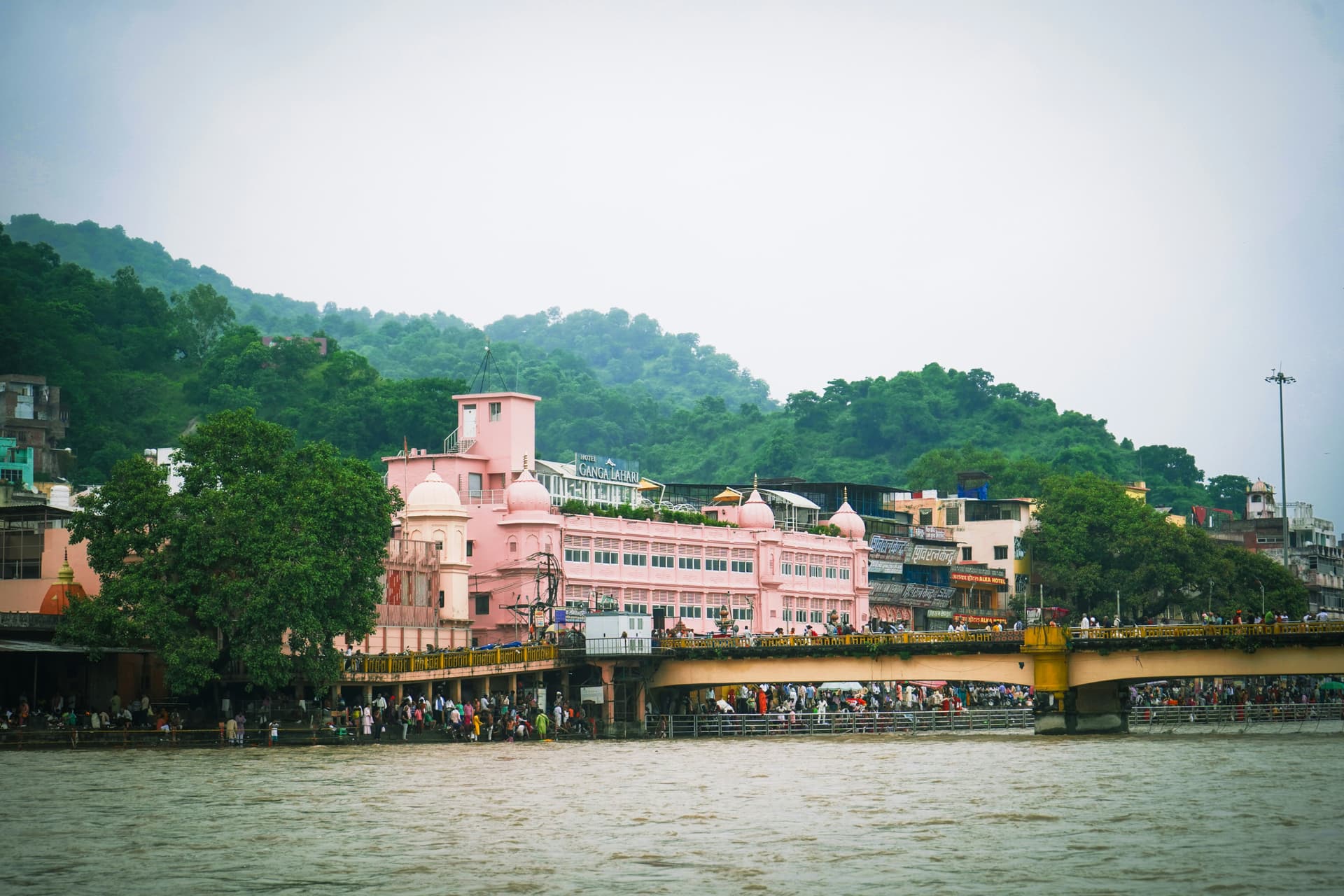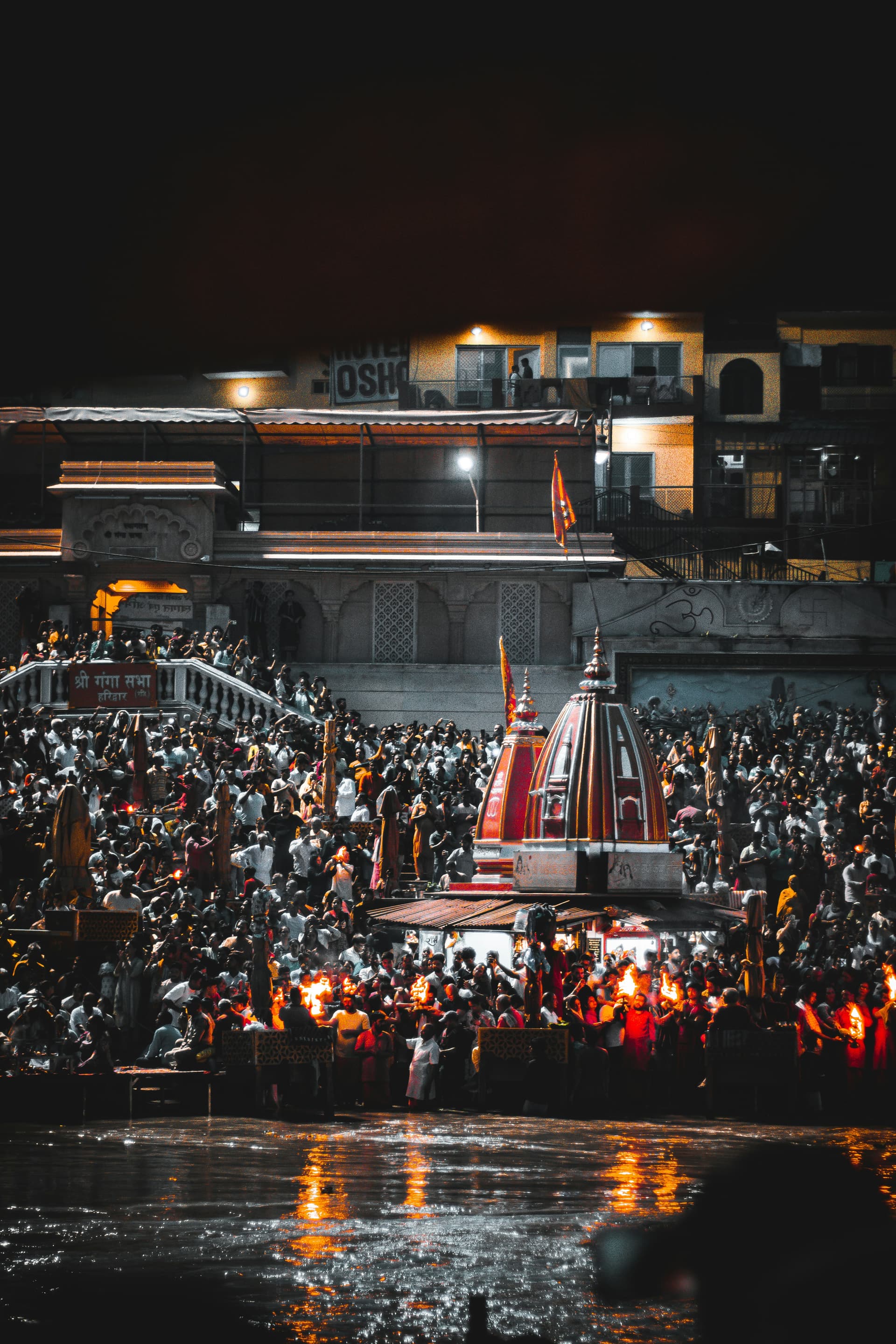
There is a moment at Har Ki Pauri every evening when the lamps are lifted, the conch shells blow, and the entire crowd goes silent for a single beat before erupting into chanting. If you've witnessed it, you don't forget it. If you haven't — this guide will make sure your first time is everything it should be.
Ganga Aarti at Haridwar is one of the oldest living rituals in the world. It happens every single day — sunrise and sunset — regardless of season, weather, or how many people are watching. Some evenings draw 500 people. During festivals, it draws 50,000.
What Is Ganga Aarti?
Aarti is a Hindu ritual of offering light to a deity. At Haridwar, the deity is the Ganga river herself. Every evening, trained priests stand at the edge of Har Ki Pauri ghat and perform a synchronized fire ceremony — spinning large brass lamps (deepams) filled with burning ghee, while mantras are chanted, conch shells are blown, and bells ring continuously.
The ritual honours the Ganga as a living goddess, thanking her for sustaining life and for providing the most sacred water in Hindu tradition. It is simultaneously intimate and immense — personal devotion happening at civic scale. If you'd like a ritual just for you or your family, you can book a pandit for a private Ganga puja alongside the public aarti.
Ganga Aarti Timings — Haridwar 2025/2026
- →Summer (April–September): 5:45 AM
- →Winter (October–March): 6:30 AM
- →Duration: 45–60 minutes
- →Summer (April–September): 7:00 PM
- →Winter (October–March): 6:00 PM
- →Duration: 45–60 minutes
- →Arrive 30 minutes early for a good position
Tip: Timings shift slightly around festivals and moon phases — check live crowd status for today's exact conditions. Locals at your dharamshala usually know the exact time too.
Where to Watch: Best Spots at Har Ki Pauri
Har Ki Pauri has multiple ghats and viewing areas. Where you stand determines your experience.
- →Main ghat platform (ground level) — Closest to the priests and the river. Maximum energy, maximum crowd. Arrive 40 minutes early for a spot here.
- →Upper terrace platforms — Slightly elevated, good sight lines, less crowded. Better for photography. Good for elderly visitors or those uncomfortable in dense crowds.
- →Bridges over the Ganga — The metal footbridges give a bird's-eye view of the entire ghat lit with lamps. Excellent for photos but you lose the sound and energy of the crowd.
- →Opposite bank — Few people know you can watch from the far bank. Calm, spacious, full panoramic view. Bring binoculars.
What Happens During the Ceremony — Minute by Minute
- →T-30 min — Crowd builds. Vendors sell flower offerings (diyas) for ₹10–30. Buy one — you'll float it on the Ganga after the aarti.
- →T-10 min — Priests take their positions. Conch shells blow once. The crowd quiets.
- →T-0 — Aarti begins. Large brass deepams (some with 51 flames) are lit. Priests move in unison. Bell ringing starts.
- →T+5 min — Crowd chanting builds: 'Har Har Gange.' The sound is extraordinary.
- →T+15 min — Peak intensity. Priests spin the lamps. The reflection on the Ganga water in the dark is spectacular.
- →T+30 min — Mantras deepen. Flower offerings are thrown into the river.
- →T+45 min — Final conch blow. Aarti ends. Priests distribute prasad (holy offering). Float your diya on the river.
Dress Code and Etiquette
Har Ki Pauri is a sacred space. There is no strict dress code for observers, but there are strong cultural expectations:
- →Remove shoes before entering the ghat area — sandals and shoes are left at the edge
- →Cover shoulders and knees — full-length clothing is preferred
- →Photography is allowed but do NOT use flash during the ceremony
- →Do NOT turn your back to the river or the priests during aarti
- →Switch phones to silent — don't take calls during the ceremony
- →Accept prasad with both hands if offered by a priest
- →Women should cover their heads with a dupatta or scarf inside the main ghat
The Floating Diya — How to Do It Properly
Almost everyone at Ganga Aarti floats a diya (small clay lamp with a flower and a tea light). It is not mandatory, but it is the most personal part of the experience.
- →Buy a diya from vendors near the ghat — ₹10–30 for a simple one, ₹50–100 for decorated flowers
- →Light the candle in the diya from the collective flame shared among worshippers
- →Hold it in both hands and make a silent wish or prayer
- →Kneel or sit at the ghat edge and gently place it on the water — don't throw it
- →Watch it float downstream into the dark with thousands of others
“The moment you set your diya on the Ganga and watch it join ten thousand others moving downstream — that is the moment most people understand why this city exists.”
Practical Tips for First-Time Visitors
- →Arrive early — 30–40 minutes before start time, especially on weekends and during Sawan
- →Leave valuables locked in your dharamshala — pickpocketing occurs in dense crowds
- →Wear slip-on shoes or sandals — removing and carrying lace-up shoes is inconvenient
- →Bring a small torch/phone light — the ghat area before the ceremony can be dark
- →The crowd disperses slowly after the ceremony — don't rush, enjoy the atmosphere
- →Evening temperature drops quickly near the river — carry a light layer
Morning vs Evening Aarti — Which Should You Attend?
If you can only attend one, attend the evening. The darkness, the fire, the reflections on water, and the size of the crowd make it a completely different experience from the morning aarti.
But if you're staying multiple nights, attend both. The morning aarti has its own extraordinary quality — the mist on the river, the birdsong, and a much smaller, more devoted crowd.
Tip: Stay in a dharamshala within 10 minutes walk of Har Ki Pauri — that way you can attend both aartis without the hassle of transport at 5:30am or 10pm. Browse verified stays at DharamStay.
Ready to Visit Haridwar?
Book a verified dharamshala starting at ₹300/night. Advance booking, instant confirmation.
Browse Dharamshalas →